

Top 5 Ways Sacramento Contractors Can Get More Leads in 2026
Discover the top 5 lead generation strategies Sacramento contractors are using in 2026 to grow their business, book more jobs, and stand out from competitors. From Facebook Ads and Google PPC to SEO, referrals, and Google My Business, this guide breaks down what actually works for local contractors today.

You're good at what you do. Your work speaks for itself. But your phone isn't ringing the way it should.
That's the reality for most Sacramento contractors. You can build the best fence, install the cleanest siding, or pour the smoothest foundation in the region — none of it matters if homeowners can't find you when they search "contractor near me" on their phone.
The contractors who stay booked year-round aren't necessarily better at the work. They're better at being found. Here are five ways to make that happen — ranked by how fast they generate leads and how well they work specifically in the Sacramento market.
We'll break down exactly how each strategy works, what it costs, the pros and cons, and real numbers so you can decide where to put your time and money.
1. Google Ads (PPC) — Leads Starting This Week
Speed to leads: Immediate
Monthly budget: $1,500–$5,000 for Sacramento market
Best for: Contractors who need leads now and have budget to invest
Average cost per lead: $35–$85 depending on trade
When a homeowner in Elk Grove searches "fence installer near me" or "kitchen remodel Sacramento," the first three results they see are Google Ads. That's the top of the page, above the map pack, above everything organic. If you're not there, your competitor is — and they're getting the call.
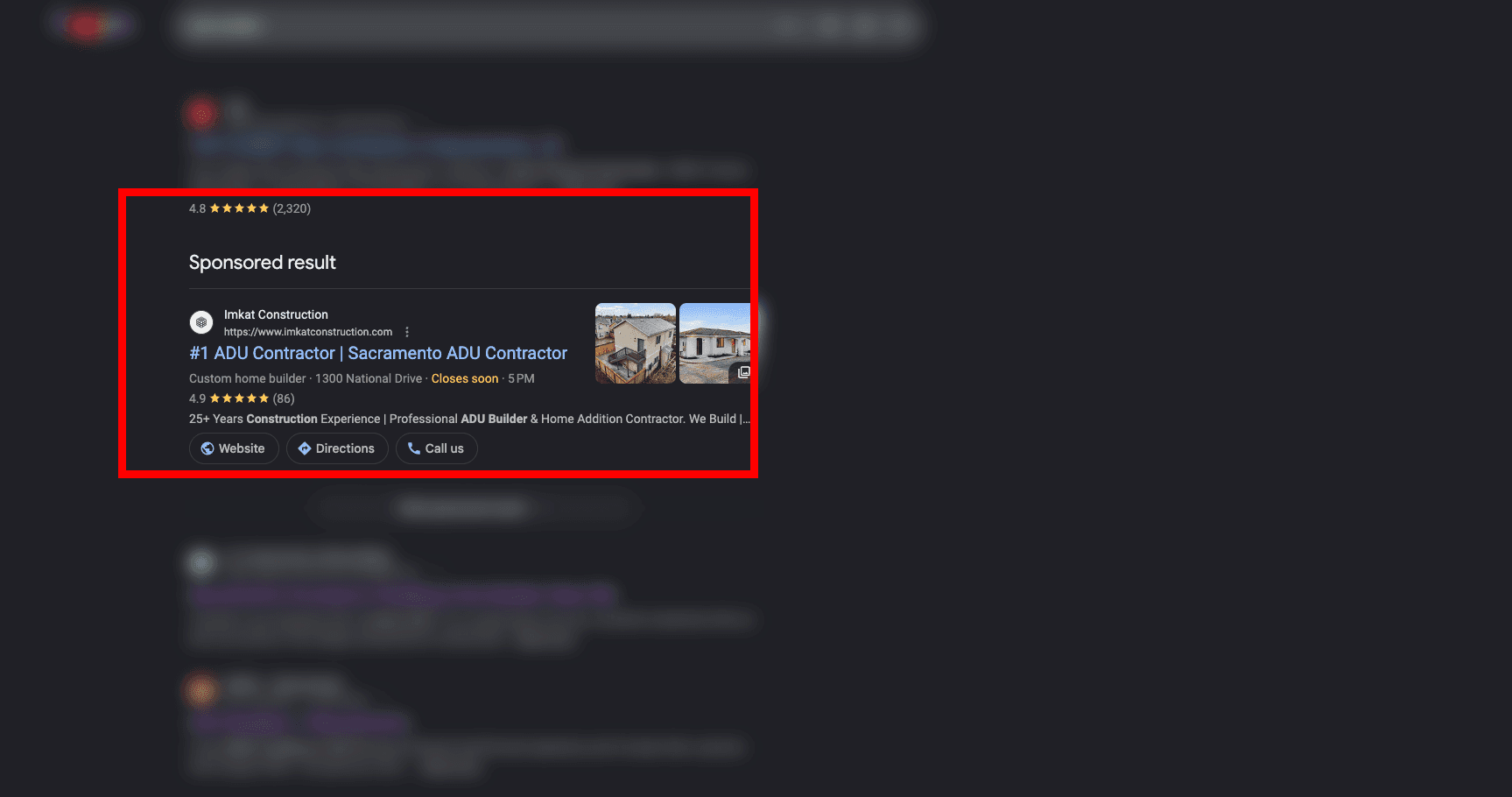
Why Google Ads Work for Sacramento Contractors
Intent is everything. Someone searching "patio cover installation Sacramento" isn't browsing. They have a project, they need a contractor, and they're ready to get quotes. Google Ads put you in front of these people at the exact moment they're looking to hire.
You only pay when someone clicks. No impressions fees, no monthly retainers for nothing. A click on a Sacramento contractor ad typically costs $8–$25 depending on the trade and competition.
You control the geography. Target Sacramento, Roseville, El Dorado Hills, Folsom — whatever your service area is. Don't waste money showing ads to people in San Francisco who will never hire you.
Results are measurable from day one. Unlike a billboard or a mailer, you know exactly how many people saw your ad, how many clicked, how many called, and what each lead cost. If a campaign isn't working, you adjust it in real time — not after you've spent $5,000 on a print ad that may or may not have worked.
What a Good Contractor Google Ads Campaign Looks Like
- Search ads targeting "[your service] + [city]" keywords
- Call-only ads for mobile users who want to call directly from the search result
- Google Local Services Ads (LSAs) — the "Google Guaranteed" badge ads that appear above standard PPC. These charge per lead, not per click, and build trust instantly
- Landing pages built specifically for each service — not your homepage. A homeowner who searches "fence installation Sacramento" should land on a page about fence installation, not your general contractor website
- Negative keywords to filter out junk — "DIY," "jobs," "salary," "free," "cheap"
- Ad extensions — call buttons, location, site links, and review snippets that make your ad bigger and more clickable than competitors
- Conversion tracking — so you know which keywords and ads actually generate phone calls, not just clicks
Sacramento-Specific Tip
Bid higher on foothill and suburban cities like El Dorado Hills, Granite Bay, and Folsom. These areas have higher home values, bigger project budgets, and less ad competition than downtown Sacramento. Your cost per lead drops and your average job value goes up. A fence job in Granite Bay averages $8,000–$15,000 vs. $3,000–$6,000 in other parts of Sacramento — same ad cost, much bigger return.
Real Numbers: What to Expect
A Sacramento contractor spending $3,000/month on well-managed Google Ads can typically expect:
- 150–300 clicks per month
- 20–40 phone calls or form submissions
- 5–10 booked estimates
- 2–5 signed contracts
At an average job value of $5,000–$15,000, that's $10,000–$75,000 in revenue from $3,000 in ad spend. The math works — when the campaign is managed properly.
Pros
- Fastest path to leads — calls can start within 24 hours of launching
- You only appear when someone is actively searching for your service
- Full control over budget, geography, and which services you promote
- Easy to scale up during busy season and pull back during slow months
- Measurable ROI — you know exactly what each lead costs
- Google Local Services Ads add "Google Guaranteed" trust badge
Cons
- Leads stop the moment you stop paying — no lasting benefit
- Competitive trades (roofing, HVAC, plumbing) can have high cost-per-click ($25–$50+)
- Requires ongoing management — a neglected campaign wastes money fast
- Click fraud from competitors and bots can eat budget (use click fraud protection)
- Bad landing pages kill conversion rates — you need more than just ads
- Learning curve is steep if you DIY — most contractors should hire a professional
2. SEO — The Long Game That Pays for Itself
Speed to leads: 3–6 months to see results
Monthly investment: $1,000–$5,000 (agency) or sweat equity (DIY)
Best for: Contractors who want a steady pipeline without paying per click forever
Google Ads get you leads today. SEO gets you leads every day — without paying for each one. When your website ranks on page one for "ADU builder Sacramento" or "siding installation Roseville," every click is free. No ad spend. No cost per lead. Just organic traffic from homeowners searching for exactly what you do.
The difference between SEO and Google Ads is ownership. With ads, you're renting space at the top of Google. With SEO, you own it. Stop paying for ads and the leads vanish overnight. Stop paying for SEO and your rankings can hold for months — sometimes years — because the content and authority you built stays on your website.
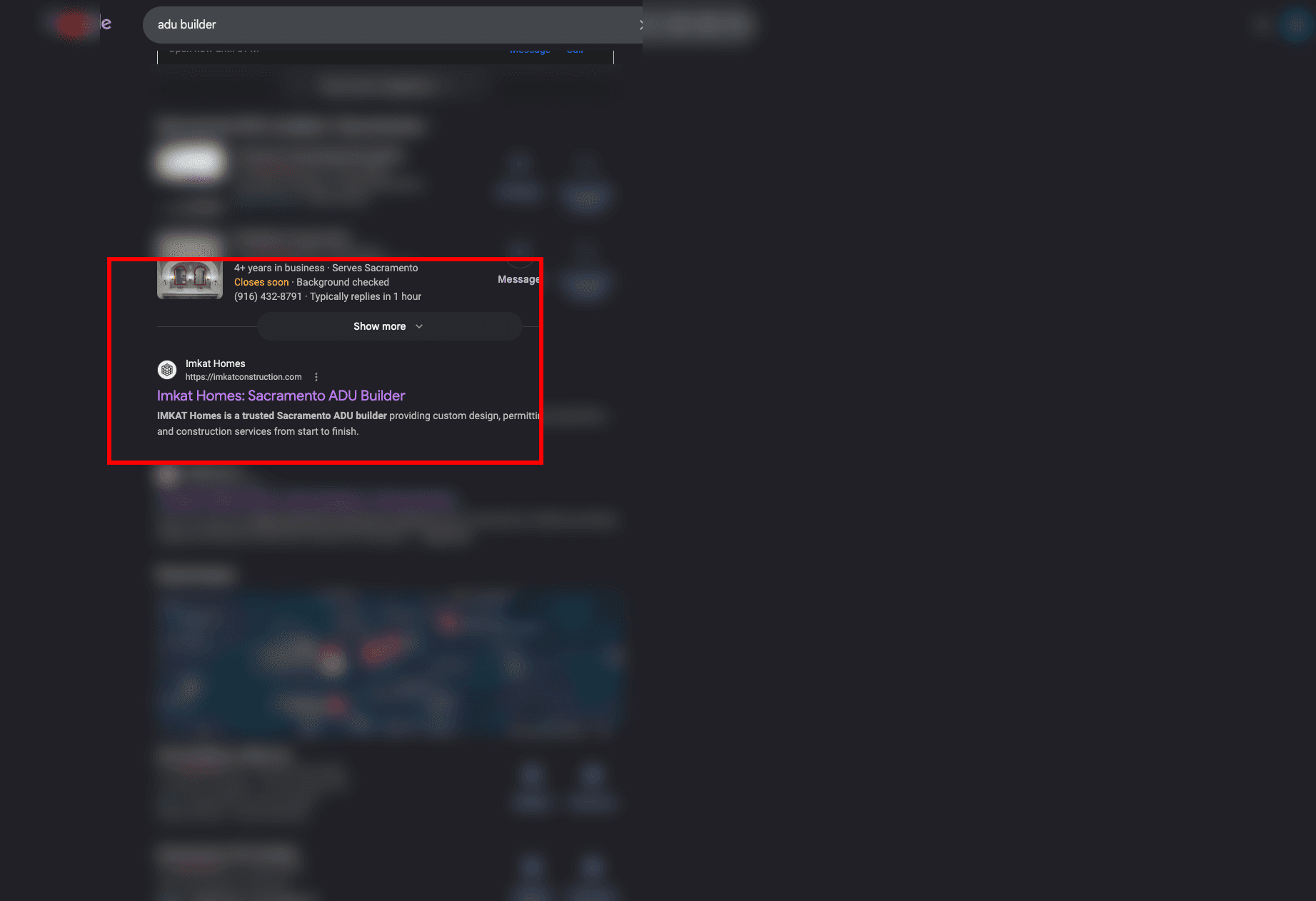
What SEO Looks Like for a Sacramento Contractor
Your Google Business Profile is your #1 asset. When someone searches a local service, Google shows the map pack — three businesses with reviews, photos, and a click-to-call button. Getting into that map pack is the single highest-ROI thing you can do. It requires:
- A fully completed GBP listing with correct name, address, and phone number
- The right business categories (be specific — "Fence Contractor" beats "General Contractor")
- 20+ Google reviews with a 4.5+ average
- Photos uploaded weekly — job site progress, finished work, your team
- Regular Google posts with project updates and seasonal offers
City pages on your website. If you serve 10 cities, you need 10 pages — one for each city, targeting "[your service] in [city]." Not templated pages where you swap the city name. Real pages with unique content about your work in that area, local project photos, and city-specific details. A well-written city page for "fence installation Roseville" can rank on page one and bring in 10–30 leads per month on its own.
Blog content that answers questions homeowners ask.** "How much does a patio cover cost in Sacramento?" "Do I need a permit for a fence in El Dorado Hills?" Every blog post is a new opportunity to rank for a long-tail keyword and bring a potential customer to your site. These posts also build topical authority — Google sees that you have deep expertise in your trade, and rewards your entire site with higher rankings.
Technical basics that most contractor websites miss:
- Mobile-friendly design (70%+ of searches are on phones)
- Fast load times (under 3 seconds)
- Proper title tags and meta descriptions on every page
- Schema markup that tells Google you're a local service business
- Internal linking between service pages, city pages, and blog posts
- Image optimization with descriptive alt text and compressed file sizes
How SEO Compounds Over Time
Month one, you rank for nothing. Month three, you start showing up for a few long-tail keywords. Month six, your city pages start pulling traffic. Month twelve, you're ranking for your core service keywords and the leads come in daily — without ad spend.
Here's what that looks like in real numbers for a Sacramento contractor with a well-optimized site:
- Month 1–3: 50–200 organic visitors/month. Mostly blog traffic. Few leads.
- Month 4–6: 300–800 visitors/month. City pages start ranking. 5–15 leads/month.
- Month 7–12: 1,000–3,000 visitors/month. Core keywords ranking. 20–50 leads/month.
- Year 2+: 3,000–10,000 visitors/month. Dominant for your trade in Sacramento. 50–100+ leads/month.
The contractors who invest in SEO now will dominate Sacramento search results for years. Your competitors who don't will be paying for every single click indefinitely.
Pros
- Once you rank, leads are essentially free — no cost per click
- Builds long-term authority that competitors can't easily replicate
- Compounds over time — the longer you invest, the stronger it gets
- Organic results get more trust from consumers than paid ads
- Content you create (blogs, city pages) works for you 24/7 for years
- Strengthens every other marketing channel — better website = higher ad conversion
Cons
- Takes 3–6 months minimum before you see meaningful results
- Requires consistent effort — content creation, link building, optimization
- Google algorithm changes can temporarily impact rankings
- Competitive keywords (plumber, roofer, HVAC) are harder to rank for
- Hard to DIY well — most contractors don't have time to write blog posts and optimize pages
- No guarantees — SEO is earned, not bought, and results vary by market and competition
3. Facebook and Instagram Ads — Reach Homeowners Before They Search
Speed to leads: 1–2 weeks
Monthly budget: $500–$2,500
Best for: Contractors with strong before/after photos and visual work
**Average cost per lead:** $15–$75
Google Ads catch people who are already searching. Facebook and Instagram ads reach people who aren't searching yet — but should be.
A homeowner in Roseville scrolls through Instagram, sees a stunning before-and-after of a backyard patio transformation in their neighborhood, and thinks: "We should finally do something about our backyard." That's demand generation. You're not answering a search — you're creating the desire.
This is a fundamentally different type of marketing. Google is pull marketing — you catch demand that already exists. Facebook is push marketing — you put your work in front of people and create new demand. Both are valuable, but they serve different purposes in your lead pipeline.

What Works for Contractors on Facebook/Instagram
Before-and-after carousels. Swipe-through photos showing the transformation. These get the highest engagement and the most shares. A rotting fence turned into a beautiful cedar privacy fence. A cracked driveway turned into stamped concrete. Homeowners love seeing the contrast. Use 3–5 photos per carousel — start with the dramatic "before," end with the polished "after."
Video walkthroughs of completed projects. A 30–60 second video walking through a finished ADU, patio, or kitchen remodel. Keep it simple — phone video is fine. Show the work, mention the city, and end with a call to action. Videos get 2–3x more reach than static images on both platforms.
Lead form ads. Facebook's built-in lead forms let homeowners request a quote without leaving the app. They tap the ad, their name and phone number auto-fill, they hit submit. You get a lead notification instantly. Friction is nearly zero. These convert at 2–5x the rate of sending people to your website because the homeowner never has to type anything.
Retargeting. Someone visited your website but didn't call? Show them a Facebook ad for the next 30 days. They see your work in their feed repeatedly. When they're ready to commit, you're the contractor they remember. Retargeting ads are cheap ($3–$8 per 1,000 impressions) and convert at the highest rate of any ad type because the viewer already knows who you are.
Testimonial ads. Take a 5-star Google review, put it over a photo of the completed project, and run it as an ad. Social proof + visual proof in one. These build trust faster than any sales pitch.
Seasonal campaigns. "Get your patio ready for summer" in March. "Book your fence installation before winter" in September. Seasonal urgency drives action — especially when paired with a limited-time offer like free removal of the old fence.
Sacramento-Specific Tip
Keep your campaign broad — the magic is in the creative.
Facebook's algorithm is smarter than any manual targeting you can build. Give it room to find your buyers by running broad or advantage+ audiences, then let your ad do the filtering. A fence contractor's best customer will self-select when the creative speaks directly to them.
Focus your energy on the hook, the problem, and the offer. Show a backyard transformation. Lead with a pain point. Make someone stop scrolling and think "that's me." That's what drives results — not stacking zip codes and interest layers.
If you want to test location, run a simple radius around Sacramento or target the greater metro. Let the algorithm do the rest.
Real Numbers: What to Expect
A Sacramento contractor spending $1,000/month on Facebook/Instagram ads with good creative can typically expect:
- 20,000–50,000 impressions (people who see your ad)
- 200–500 clicks to your site or lead form
- 15–35 leads per month
- 3–8 booked estimates
The leads tend to be earlier in the buying cycle than Google Ads leads. They saw something that interested them, but they may not have been planning a project that day. Follow up within 5 minutes of receiving a Facebook lead — response time is everything. Wait a day and your close rate drops dramatically.
Pros
- Lowest cost per lead of any paid channel ($15–$50 vs. $35–$85 for Google)
- Visual platform is perfect for contractors — your work IS the content
- Reach homeowners before competitors do — create demand, don't just capture it
- Retargeting keeps you top of mind for weeks after someone visits your site
- Lead form ads eliminate friction — homeowners submit in two taps
- Great for building brand awareness even if they don't convert immediately
- Easily testable — swap images and copy in minutes to see what works
Cons
- Leads are colder than Google Ads — they weren't actively searching for your service
- Requires strong visual content — bad photos = bad results
- Lead quality can be inconsistent — some people submit forms without real intent
- Must follow up within minutes — Facebook leads go cold fast
- Algorithm changes can spike costs or tank reach overnight
- More work to manage creative (photos, videos, copy) compared to text-based Google Ads
- Harder to track exact ROI since the buying cycle is longer (see ad today, call next month)
- Platform fatigue — users ignore ads they've seen too many times (refresh creative every 2–3 weeks)
4. Google Business Profile Optimization — Free Leads From the Map Pack
Speed to leads: 2–4 weeks for improvements to show
Monthly investment: Free (just takes consistent time and effort)
Best for: Every contractor. Period. This is non-negotiable.
Average cost per lead: $0
This is the most underused lead source for Sacramento contractors. Your Google Business Profile is free, it shows up before organic results, and homeowners trust it because of the reviews and Google's built-in credibility.
When someone searches "fence contractor near me" on their phone, Google shows the map pack — three local businesses with star ratings, review counts, photos, and a click-to-call button. Studies show the map pack gets 42% of all clicks on local search results pages. If you're not in those top three, you're invisible for nearly half of all searchers.
Most contractors set up their GBP once and never touch it again. That's a mistake. Google rewards active, complete profiles with higher map pack placement.
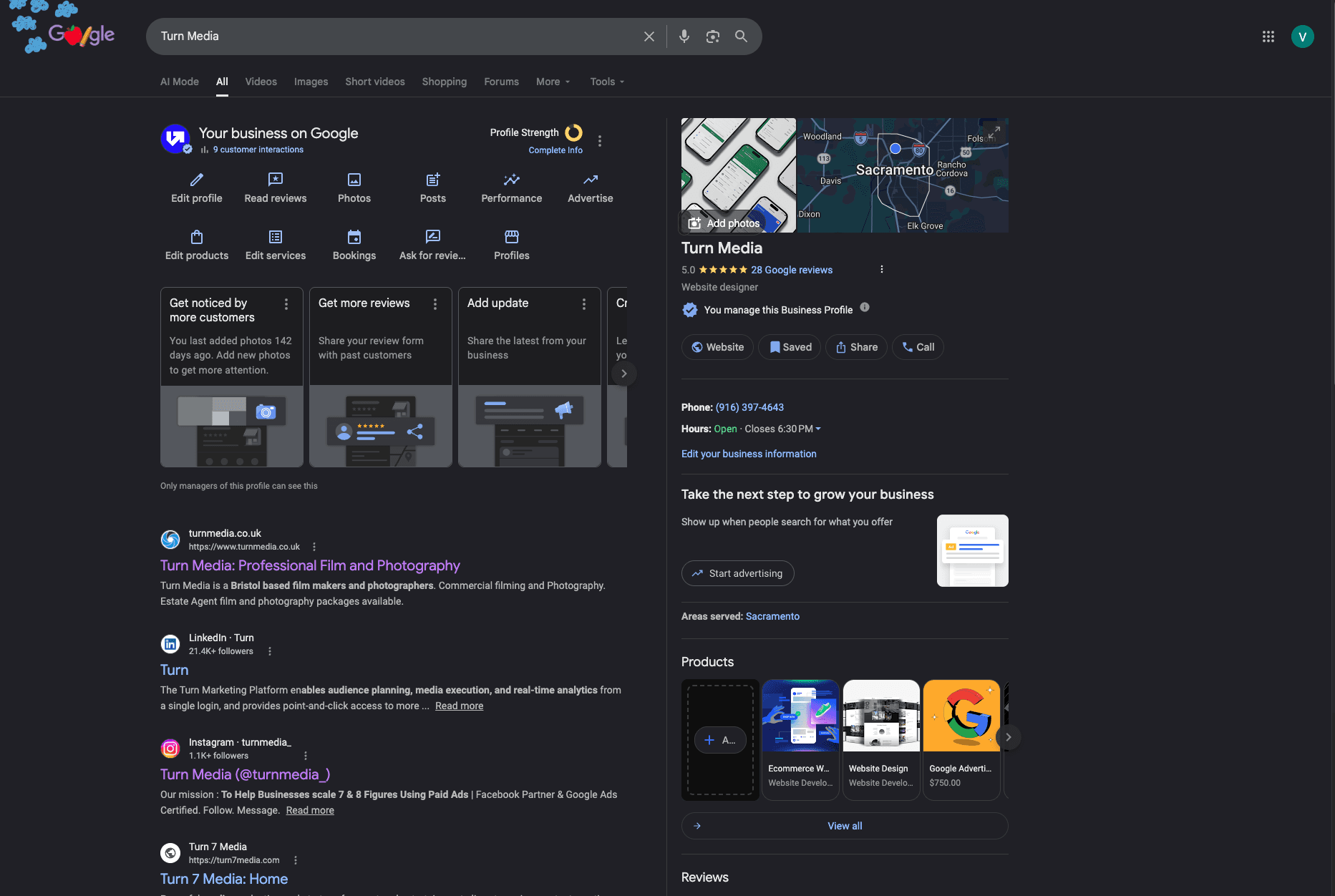
The GBP Checklist for Sacramento Contractors
Complete every field. Business name, address, phone, website, hours, service area, business description. Leave nothing blank. Incomplete profiles rank lower. Add your founding year, license number, and payment methods too.
Choose specific categories. "General Contractor" is too broad. Use your exact trade: "Fence Contractor," "Siding Contractor," "ADU Builder," "Patio Builder." You can add multiple categories — pick one primary and 2–3 secondary. The primary category has the most impact on which searches you appear for.
Get reviews consistently. Not 20 reviews from three years ago. Google wants to see recent, steady reviews. Ask every satisfied customer. Make it easy — text them the direct review link after the job is done. Aim for 2–4 new reviews per month. Consistency matters more than volume — 4 reviews this month and 4 next month beats 20 reviews in January and none until June.
Post weekly. Google Business posts work like mini social media updates. Share a completed project photo, a seasonal tip, or a limited-time offer. Posts keep your profile active and signal to Google that your business is engaged. Each post stays visible for 7 days — set a weekly reminder and spend 5 minutes on it. Include a photo, 2–3 sentences, and a call to action.
Upload photos regularly. Google's own data shows that businesses with 100+ photos get 520% more calls than those with fewer than 10. Upload job site photos, finished work, team shots, and your truck/van branding. Name your photo files descriptively before uploading — "cedar-fence-installation-roseville.jpg" tells Google more than "IMG_4829.jpg."
Respond to every review. Thank positive reviewers by name and mention the service and city ("Thanks, Mike! Glad you love the new cedar fence at your Folsom home"). For negative reviews, respond professionally and take it offline. Google watches how you handle feedback — and so do potential customers reading your reviews before they call.
Add your services with descriptions. GBP has a services section where you can list each service with a description and optional price range. Most contractors skip this entirely. Fill it out — it helps Google understand what you offer and can trigger your listing for more search queries.
Use the Q&A section proactively. Don't wait for customers to ask questions. Add your own frequently asked questions with answers: "Do you offer free estimates?" "What areas do you serve?" "Are you licensed and insured?" This pre-loads your profile with useful information and adds keyword-rich content.
Why GBP Matters More Than Your Website
Here's the truth most web designers won't tell you: for local service searches, more people click the map pack than the organic results below it. A strong GBP with 80+ reviews and weekly photos will generate more calls than a $10,000 website with no reviews. Do both — but if you have to pick one, optimize your GBP first.
The map pack is also mobile-first — and 70%+ of local searches happen on phones. The click-to-call button means a homeowner can go from search to phone call in two taps, without ever visiting your website.
Real Numbers: What to Expect
A well-optimized GBP for a Sacramento contractor typically generates:
- 500–2,000 profile views per month
- 30–100 website clicks per month
- 20–60 direction requests per month
- 15–50 direct phone calls per month
All of this is free. No ad spend. No agency fees. Just a complete, active profile that Google rewards with visibility.
Pros
- Completely free — no ad spend required
- Shows up above organic search results (map pack)
- Click-to-call makes conversion instant on mobile
- Reviews build trust before a homeowner even visits your website
- Photos showcase your work directly in search results
- Weekly posts keep your profile fresh and signal activity to Google
- Highest trust factor — consumers trust Google reviews more than any other platform
- Compounds with SEO — a strong GBP boosts your organic rankings too
Cons
- You can't fully control your ranking — Google's algorithm decides the map pack
- Negative reviews are public and permanent (you can only respond, not delete)
- Requires consistent weekly effort to post, upload photos, and request reviews
- Competitors can (and do) leave fake negative reviews — you have to monitor and dispute them
- Google occasionally suspends profiles for policy violations (even accidental ones)
- Limited to 3 spots in the map pack — if your area has 50 contractors, 47 don't make the cut
- Service-area businesses (no physical storefront) have a harder time ranking than businesses with a public address
- Google can change your business info without your permission (categories, hours, etc.) — check it regularly
5. Referral and Review Systems — Turn Happy Customers Into a Lead Machine
Speed to leads: Ongoing (builds over time)
Monthly investment: Minimal ($50–$500 in incentives + a simple system)
Best for: Established contractors with a customer base
Average cost per lead: $25–$100 (referral incentive cost)
Word of mouth has always been the best lead source for contractors. The problem is that most contractors leave it to chance. They do great work, hope the customer tells their neighbors, and move on to the next job.
Hope is not a strategy.
A referral system turns hope into a process. It takes the thing that's already happening naturally — happy customers recommending you — and adds structure, incentives, and follow-up to make it happen 5–10x more often.
Referral leads are also the highest quality leads you'll ever get. The homeowner already trusts you because someone they know vouched for you. They've seen the work. They're not comparing five contractors — they're calling you because their neighbor said to. These leads close at 50–70% compared to 10–20% for cold leads from ads.
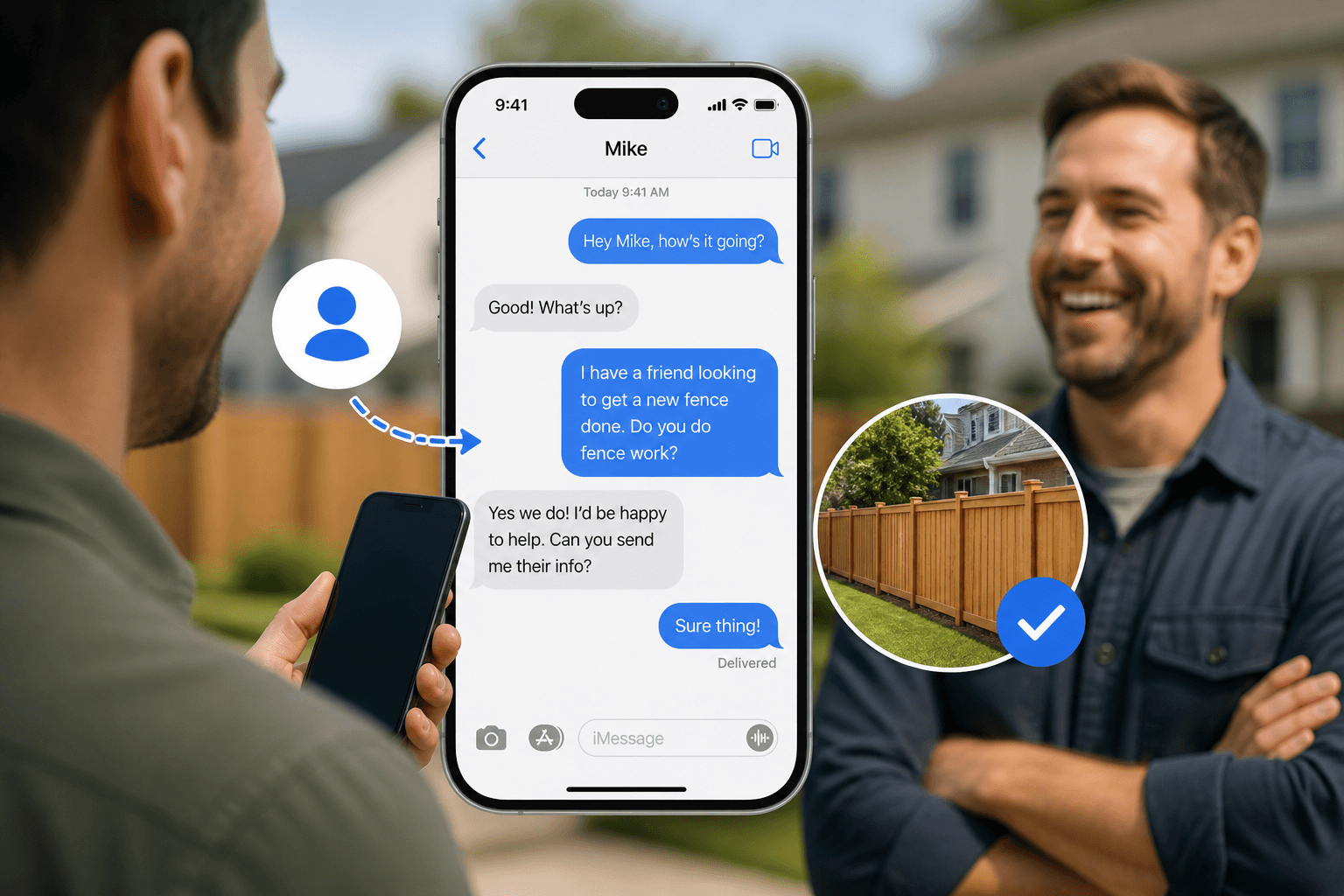
How to Build a Referral System That Runs Itself
Ask at the right moment. The best time to ask for a referral is during the final walkthrough — when the customer is standing in front of their beautiful new project and feeling great about the investment. Not two months later in a follow-up email. The emotional peak is your window.
Make it specific. "Do you know anyone who might need a new fence?" works better than "Send people our way." Give them something concrete to say yes to. Even better: "Your neighbors on this street probably noticed the crew out here this week — if any of them ask about it, I'd love to take care of them. Here's a card with a referral code."
Offer a real incentive. $100–$250 per referral that turns into a signed contract. Or offer a gift card, a free maintenance visit, or a discount on future work. The incentive doesn't have to be huge — it just has to exist so people remember to mention you. Some contractors offer tiered incentives: $100 for the first referral, $200 for the second, $300 for the third.
Create a referral card or link. Physical cards work for in-person moments. A unique referral link works for digital sharing. Make it dead simple for the customer to pass your info along. The more friction in the process, the fewer referrals you'll get.
Follow up after 30 days. Send a text: "Hey [name], hope you're loving the new patio! If any neighbors ask about it, we'd love to take care of them too. Here's a referral link — you'll get $200 for anyone who books." Follow up again at 60 and 90 days. People get busy — a gentle reminder keeps you top of mind.
Follow up after your project appears on the street.** When neighbors see construction happening, they get curious. Some contractors leave a small yard sign during the build ("Another quality project by [Your Company]"). After the job is done, knock on a few doors, introduce yourself, and leave a card. You're already credible — the neighbors watched you work for weeks.
Automate the review request. After every completed job, send an automated text with your Google review link. Tools like NiceJob, Birdeye, or even a simple SMS template make this hands-free. The more reviews you collect, the higher you rank in the map pack, which generates more organic leads. Reviews and referrals feed the same flywheel.
Build a past customer email list. Once a quarter, send a simple email to past customers: seasonal maintenance tips, a project showcase, and a reminder of your referral program. This keeps your name alive in their inbox. When their coworker mentions needing a contractor, your email from last week makes the referral effortless.
The Compound Effect
A contractor who completes 50 jobs per year and gets a referral from 20% of them adds 10 pre-qualified leads annually — from customers who already trust the recommendation. Those referral leads close at 2–3x the rate of cold leads from ads.
Over five years, that's 50 referral leads — many of whom generate their own referrals. One happy customer can become a chain of 3–4 jobs over time. The contractors with the strongest referral systems eventually reduce their ad spend because the pipeline fills itself.
Pros
- Highest quality leads — pre-sold, pre-qualified, ready to hire
- Highest close rate of any lead source (50–70%)
- Very low cost — just the referral incentive
- Builds a self-sustaining pipeline over time
- Each referral can generate more referrals (compound effect)
- No dependence on Google, Facebook, or any platform you don't control
- Strengthens customer relationships — people feel valued when you follow up
- Yard signs and door knocking cost nothing and reach the most relevant audience (neighbors)
Cons
- Requires an existing customer base — not useful for brand-new contractors
- Unpredictable volume — you can't control when or if referrals come in
- Hard to scale quickly — referrals trickle in, they don't flood in
- Relies on customer follow-through — even with incentives, most people forget
- Can't target specific services or cities the way ads can
- No referral system replaces marketing — it supplements it
- Incentive costs add up if you're generous ($250 per referral x 20 referrals = $5,000/year)
- Tracking referrals manually is messy — invest in a simple CRM or referral tool
Side-by-Side Comparison: Marketing Channels for Home Service Businesses
Factor | Google Ads | SEO | Facebook/IG Ads | Google Business Profile | Referrals |
|---|---|---|---|---|---|
Speed to leads | Immediate | 3–6 months | 1–2 weeks | 2–4 weeks | Ongoing |
Monthly cost | $1,500–$5,000 | $1,000–$3,000 | $500–$2,500 | Free | $50–$500 |
Cost per lead | $35–$85 | $0–$15 | $15–$50 | $0–$20 | $25–$100 |
Lead quality | High | High | Medium | High | Very High |
Close rate | 15–25% | 15–25% | 10–15% | 20–30% | 50–70% |
Scalability | High | High | Very High | Medium | Medium |
Long-term value | Low | Very High | Low | High | Very High |
DIY friendly | Hard | Hard | Medium | Easy | Easy |
Best for | Fast lead generation | Long-term growth | Awareness + retargeting | Local trust | High-converting warm leads |
Which Strategy Should You Start With?
Start with Facebook and Instagram Ads, have a properly optimized Google Business Profile setup, then begin running Google Ads.
Facebook and Instagram are one of the fastest ways to get your business in front of local homeowners, build trust, showcase your work, and generate awareness in your market. Use real project photos, videos, reviews, and before-and-after content.
At the same time, make sure your Google Business Profile is fully optimized with:
Reviews
Service areas
Project photos
Service descriptions
Consistent posting
A strong Google Business Profile helps you appear in local map results and builds trust when people search your company name after seeing your ads.
Once those are established, start running Google Ads to capture high-intent homeowners actively searching for your services. Google Ads typically generate the highest quality leads because the customer is already looking for a solution.
After that, begin investing into SEO for long-term organic growth and lower lead costs over time.
Finally, build a referral and review system so past customers continue generating new business for you.
The strongest companies combine all of these channels together:
Facebook/Instagram Ads for awareness
Google Business Profile for trust and visibility
Google Ads for immediate high-intent leads
SEO for long-term rankings
Referrals for warm, high-converting customers
The Biggest Mistake We See
Sacramento contractors who try one channel, don't see results in 30 days, and jump to the next. Google Ads need 30–60 days of optimization to hit their stride. SEO needs 3–6 months. Facebook ads need 2–3 rounds of creative testing. Referral systems need 6 months of consistency to build momentum.
Pick your channels, commit for 90 days minimum, measure the results, and then adjust. Short-term thinking kills long-term growth.
Ready to Fill Your Pipeline?
At Turn Media, we help Sacramento contractors build lead generation systems that actually work. From Google Ads management and SEO to website design, social media, and reputation management — we handle the marketing so you can focus on the work.
We work with fencing contractors, ADU builders, siding installers, roofers, painters, concrete companies, and general contractors across the Sacramento region. We know this market because we're based here.
No long-term contracts. No vanity metrics. Just more calls from homeowners who are ready to hire.
Get in touch for a free marketing audit of your contractor business.
INSIGHTS
Related Insights You Shouldn’t Miss
Explore more strategies and breakdowns to help you turn traffic into real customers.
Top 5 Ways Sacramento Contractors Can Get More Leads in 2026
Discover the top 5 lead generation strategies Sacramento contractors are using in 2026 to grow their business, book more jobs, and stand out from competitors. From Facebook Ads and Google PPC to SEO, referrals, and Google My Business, this guide breaks down what actually works for local contractors today.
Best Construction Website Design in 2026: What Separates Good From Great
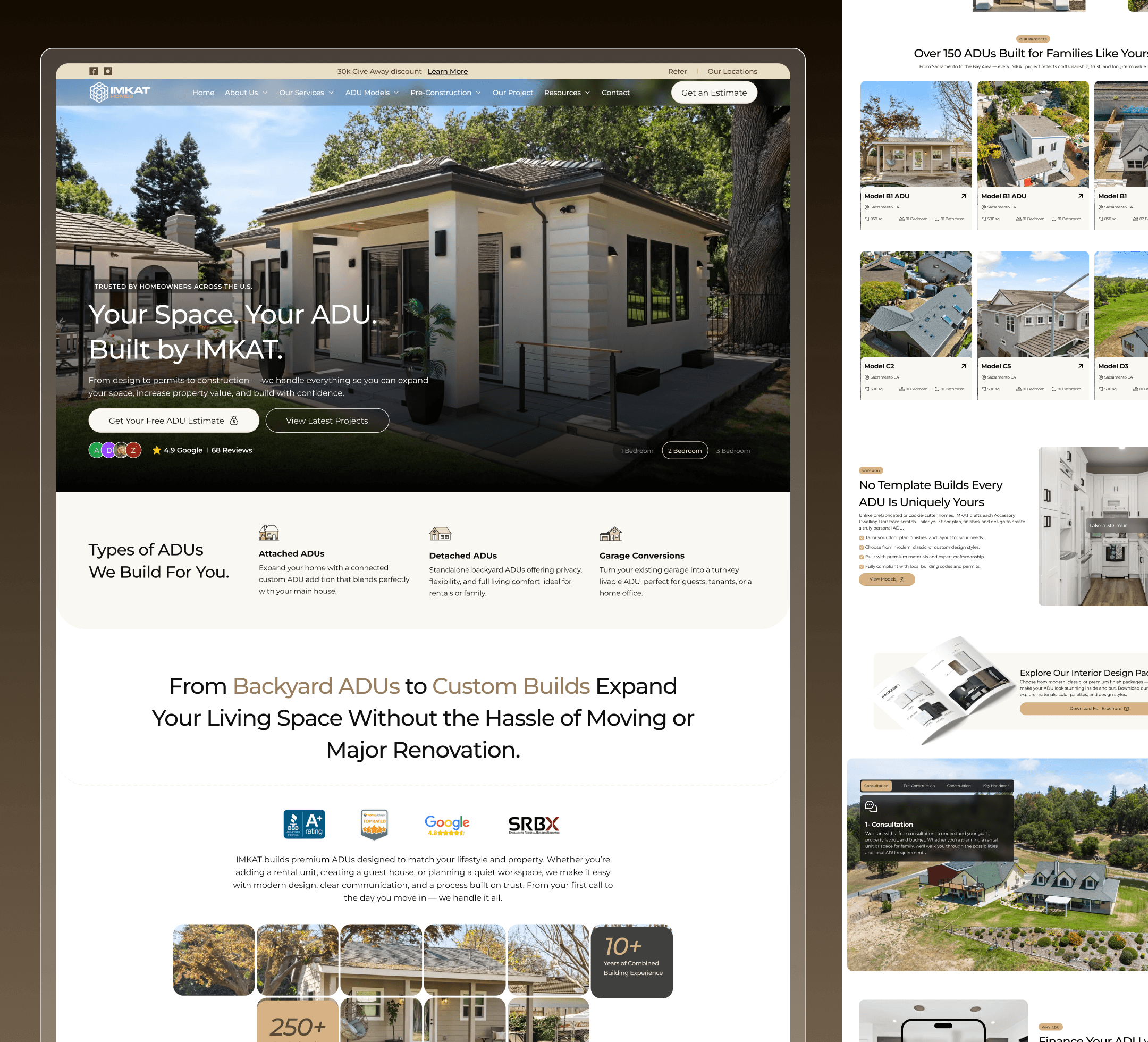
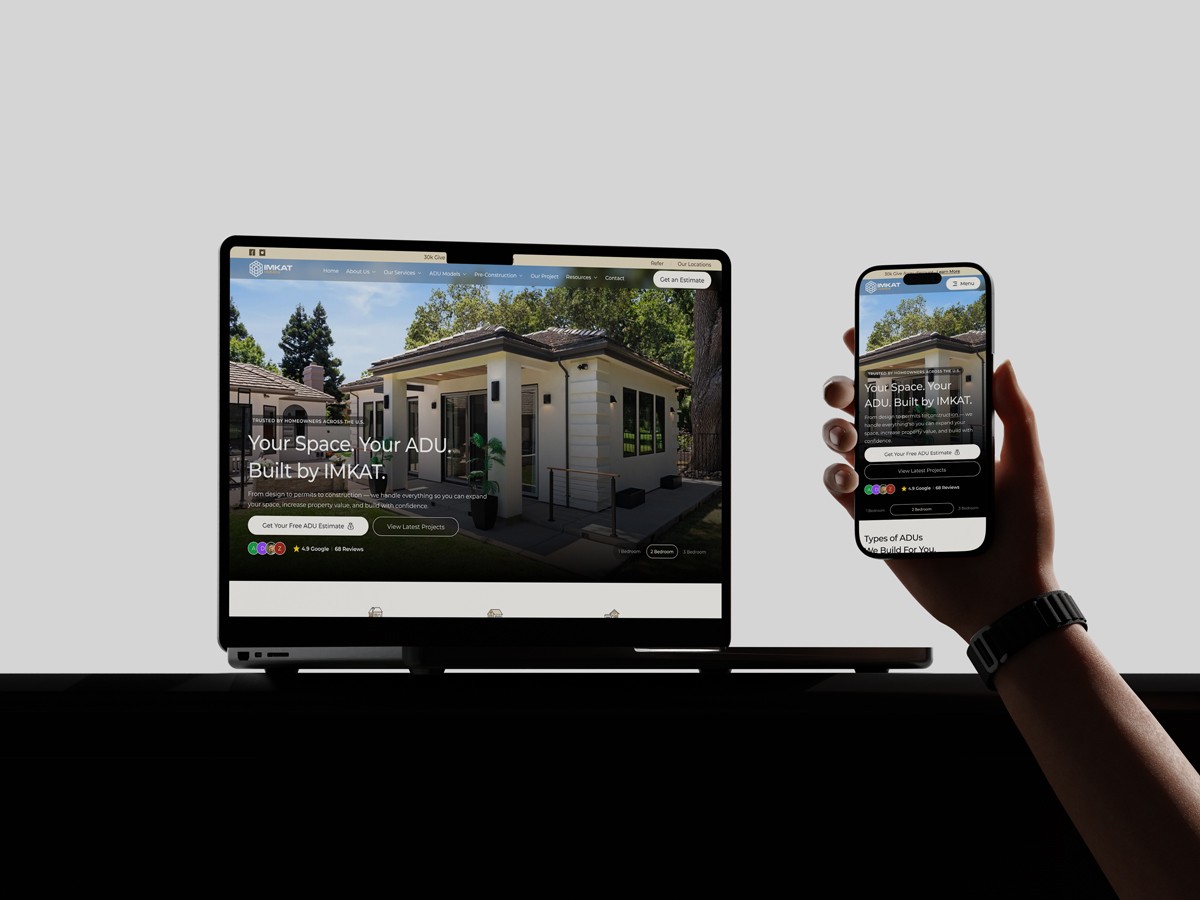
Most construction company websites look the same, a stock photo of a hard hat, a phone number, and a "Request a Quote" button buried at the bottom. They check the box. But they don't win customers. The best construction websites do more than look professional. They convert visitors into leads, rank on Google, and build trust before a homeowner ever picks up the phone. We studied dozens of contractor and builder websites across residential construction, remodeling, and specialty trades to identify what actually works. One site stood out as a benchmark for how construction companies should build their online presence in 2026: IMKAT Homes, a California ADU builder at imkatconstruction.com. Here's what makes it work — and what every construction company can learn from it.
Why Your Website Looks Good But Doesn't Get Leads
Your website looks great — but the leads aren't coming. Here's why design alone doesn't convert, and the three mistakes quietly killing your enquiries.
Built alongside business owners not just delivered to them.
We build the ads, funnels, and systems that turn your ad spend into real revenue.
Free strategy call tailored to your business
Clear next steps and recommendations
Built around your goals and budget


We help local businesses turn their online presence into a consistent source of customers through websites, marketing, and growth systems built to perform.






© 2026 Turn Media. All rights reserved.